




Building confidence to respond with competence in moments that matter

Infant and Early Childhood Mental Health Consultation (IECMHC) is an evidence-based, relationship-led and prevention-based intervention that pairs a mental health consultant with adults who work with infants and young children in different settings. IECMHC changes how the adults around a child read the child's behavior and respond to it.

Where consultation lives

Consultation helps children and the adults who serve them in five settings.

  • Early care and education

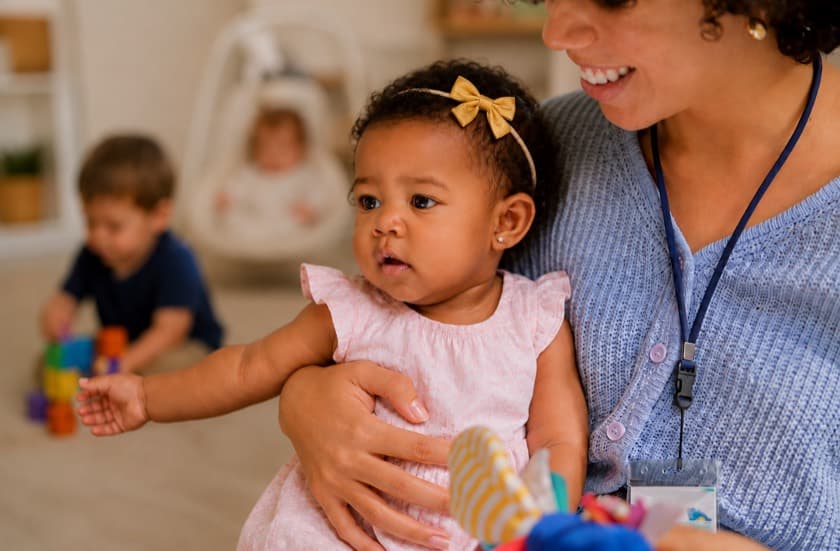
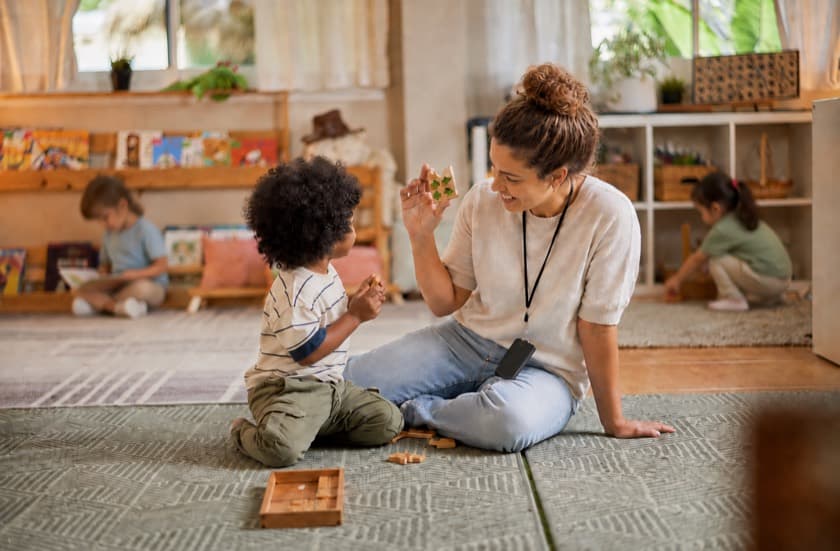
    In classrooms, consultation helps teachers respond to behavior, reduce expulsions, and keep children enrolled.

    See the evidence
  • Home visiting

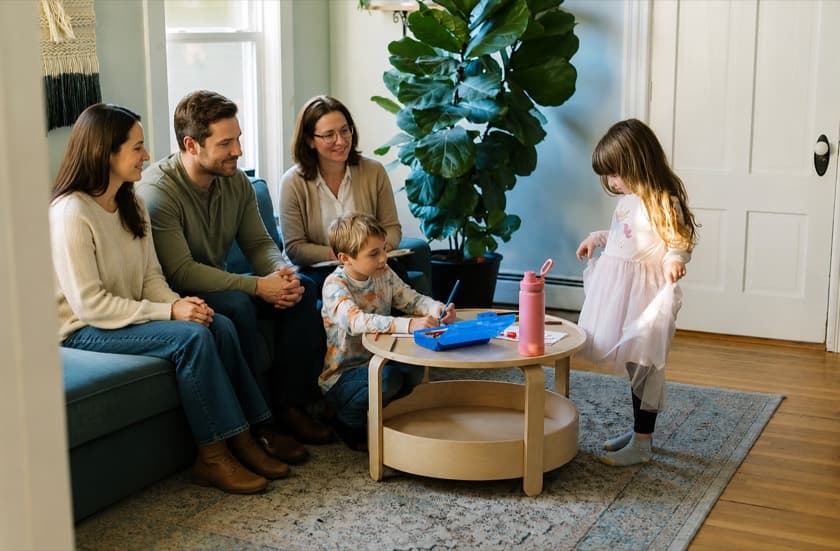
    Consultation strengthens home visitors' work with parents and infants and supports the earliest relationships.

    See the evidence
  • Early intervention

    Consultation supports early intervention providers around developmental and social and emotional concerns.

    See the evidence
  • Child welfare

    Consultation supports the adults caring for children who have experienced trauma and disruption.

    See the evidence
  • Pediatric primary care

    Families already come to the pediatric visit. Consultation brings mental health support into it.

    See the evidence
  • Building the evidence base

    Partner with us on research to expand the evidence base for IECMHC.

    Partner with Us

What the Center does

  • Workforce developmentWe train current and aspiring consultants on the national IECMHC competencies. We also build and maintain the free Foundational Modules.
  • Resource centerWe manage and grow the field's library of resources including implementation guides, state profiles, financing tools, and assessment modules.
  • Research and evaluationWe commission, publish, and amplify research about what consultation delivers, in which settings, and for whom.
  • AdvocacyWe partner with state agencies and IECMHC leaders in the US and abroad to promote the adoption and implementation of consultation across settings.
  • ConnectionWe run IECMHC events, convenings, and professional development opportunities.

Our core values

  • Equity and diversity is central to IECMHC
  • The mental health of young children is intertwined with the well-being of their caregivers
  • IECMH consultants require support to develop skills and knowledge
  • IECMHC services must be based on the best available research
  • IECMHC must be part of the Early Childhood System of Care

Our impact

  • Over 100 reports published since the Center launched in September 2019
  • Dozens of events hosted for the IECMHC field

IECMHC basics

  • What is infant and early childhood mental health consultation (IECMHC)?

    IECMHC is a prevention-based approach. It pairs a mental health consultant with the adults who work with infants and young children: in child care, preschool, home visiting, early intervention, and the home. Consultation isn't about fixing kids, and it isn't therapy. It helps caregivers support children's healthy social and emotional growth.

  • A recognized best practice

    The Association of Maternal and Child Health Programs (AMCHP) recognizes IECMHC as a best practice.

  • What does an IECMH consultant do?

    Consultants are licensed or license-eligible, or come from an early childhood education background with specialized IECMH training. They know child development, the effects of stress and trauma on families, why attachment matters for young children, and how adult mental health shapes a growing child.

  • How is IECMHC different from other IECMH services?

    Rather than "fixing" the child, consultation builds the capacity of the adult to respond to children's behaviors in ways that promote social-emotional development in the child, as well as self-efficacy and resilience for the provider.

  • What are the outcomes of IECMHC?

    IECMHC has been shown to improve children’s social skills and emotional functioning, promote healthy relationships, reduce challenging behaviors, reduce the number of suspensions and expulsions, improve classroom quality, and reduce provider stress, burnout, and turnover.

Consultation works at three levels

Consultation starts with one relationship and widens from there. Choose a level to see the same reflective stance reach one child, a whole classroom, or an entire program.

  • Level one

    Child and family

    A specific child has the team concerned. The consultant helps the adults understand what the behavior is communicating, then build one shared plan.

    • What happensA confidential, individualized plan built with the family, teachers, and home visitors. The child is never the patient.
    • Who it reachesOne child and every adult around them.

  • Level two

    Classroom and program

    The consultant works with the whole room rather than one child. Together, they change the practices and routines every child in the room meets.

    • What happensPractice-focused coaching, reflective supervision, and changes to the routines the room runs on.
    • Who it reachesEvery child in the classroom and the staff who teach them.
  • Level three

    System and community

    The consultant works alongside leaders on the policies, funding, and workforce that decide whether consultation lasts.

    • What happensWe design policy, funding, and workforce plans with the people who will run them after we leave.
    • Who it reachesEvery program in the system and the children they serve.

Where IECMH consultation fits with the supports you already have

  • The Pyramid Model

    The Pyramid Model is a tiered framework of practices. Consultation isn't a competing framework. It strengthens every tier, and consultants fluent in both are more effective.

  • Direct treatment

    Treatment works with the child directly. Consultation builds up the capacity of the adults around the child, reducing challenging behaviors and staff turnover.

  • Coaching

    Coaching builds teaching technique. Consultation adds the mental health and relational layer underneath it.

  • Reflective supervision

    Reflective supervision helps you look back and process your experience. Consultation contains this aspect, but also helps you look forward at how you'll respond to similar situations in the future.

  • Endorsement

    Infant and early childhood mental health consultation is a service, while endorsement is a credential. They share many competencies and fit together.

The Center of Excellence for IECMHC, part of Georgetown University's Thrive Center

The child is not the problem, and the adult in the room is the intervention. Young children don't change because we treat them. They change because we change how they see, respond to, and understand their behavior. The Center of Excellence's mission is to maximize the reach and impact of IECMH consultation through:

  • Workforce development
  • Research, policy, and advocacy
  • Technical assistance and organizational capacity building
  • IECMHC service delivery
  • Education and resources
  • Events and convenings

How the Center is structured & funded

  1. September 2019 to April 2024

    The Substance Abuse and Mental Health Services Administration (SAMHSA) funded the Center. Georgetown University ran it with Tulane University and the Children's Equity Project at Arizona State University.

  2. May 2024 to July 2026

    Georgetown University kept the Center running to maintain and grow the field.

  3. Since August 2026

    Attunify, Inc. now funds and runs the Center. Georgetown Thrive Center faculty give it support and guidance.

    Attunify is an IECMHC workforce development company built at Georgetown University's Thrive Center. Shai Idelson and Dr. Neal Horen lead it and co-own it with Georgetown University. Attunify's revenue comes from training the IECMHC workforce, and that revenue funds the Center.

Our team

  • Neal M. Horen, PhDDirector, Infant, Early Childhood, and Relational Health, Phyllis R. Magrab Endowed Chair in Pediatrics, Thrive Center, Georgetown University; Chief Clinical Officer, Attunify.
  • Shai IdelsonCEO, Attunify; Innovation Director, Thrive Center, Georgetown University.
  • Christine VidaHead of Operations, Attunify.
  • Julia SaylesLMHC, IECMH-EAssistant Professor, Georgetown University. Pyramid Model national consultant
  • Lauren RabinovitzProject Director, IECMHC Programs. Lead instructor
  • Jamie KnottLCPC, PMH-CInfant and Early Childhood Mental Health Consultant
  • San Juanita GuerraMA, LPC-SInfant and Early Childhood Mental Health Consultant
  • Sunny ChoLMFT, IFECMHSInfant and Early Childhood Mental Health Consultant
  • Trista VonadaLCSWInfant and Early Childhood Mental Health Consultant
Map of the United States. Choose a state to read its profile.Map of the United States. Choose the map to find a state.

39 states and DC have a profile. 11 states aren't in the scan yet, so you can't choose them: Idaho, Indiana, Iowa, Kentucky, Mississippi, Ohio, Oklahoma, South Dakota, Utah, Virginia, West Virginia.39 states and DC have a profile. 11 states aren't in the scan yet: Idaho, Indiana, Iowa, Kentucky, Mississippi, Ohio, Oklahoma, South Dakota, Utah, Virginia, West Virginia.

View the results of our national scan of consultation

We conducted a national scan on the state of consultation in early 2026. View the results for your state.