

Find the tool for your IECMHC needs
Our library holds 250+ free resources on IECMHC research and practice. Browse them below, or send us a tool, presentation, event, or paper to add.
Browse the library
Everything is free, and you don't need an account.
Webinars and eventsClosing Early: Equitable Implications of Factors that Impact Longevity of Consultation RelationshipsOutcomes of IECMHC are protection and promotion of health and well-being of children and adults. However, the early closure of consultation relationships severely limits these expected outcomes. Notably, the COVID-19 pandemic dramatically changed the early care and education (ECE) landscape and exacerbated structural challenges. These lasting disruptions impacted the capacities and functioning of families, ECE programs and providers. In addition, disruptions led to a “mass exodus” of educators from the field (Harry et al., 2022; Eadie et al., 2021). Thus, examining the current landscape of early closures in this “pandemic to endemic” era (the era following the height of COVID-19) and identifying factors that foster the continuation of consultation is essential. Using data from South Carolina's PEAR network collected with 80 ECE sites in 2020-2023, we present the landscape of early closures via the proportion of sites that “completed” consultation and the reasons for early closures (e.g., child expulsion, teacher turnover). Further, we explore factors contributing to early closures via attrition analyses and expert anecdotal evidence from PEAR consultants. GuideCompetencies: Infant/Early Childhood Mental Health Consultation BriefConsiderations for Providing Infant and Early Childhood Mental Health Consultation in Early Care and Education Settings to Support Children in Foster CareThis brief focuses on how infant and early childhood mental health consultation (IECMHC) can mitigate the challenges these children face, as well as the challenges that early childhood education (ECE) teachers and other program staff face in providing the best possible care for them. Self-assessmentConsultant Self-Assessment and Resources CrosswalkThe Early Childhood Mental Health Consultant Self-Assessment and its Resources Crosswalk help mental health professionals and consultants find the right professional development resources on this site.Resource Crosswalk GuideConsultation in Action: Daily Experiences with a Mental Health Consultant in Home VisitingA collection of brief, authentic vignettes that bring to life the nuances of Infant and Early Childhood Mental Health Consultation in Home Visiting, highlighting relationship-building, reflection, cultural humility, and the complex beauty of supporting families and home visitors alike. Webinars and eventsConsulting about Challenging Behavior, the Role of Adult PerceptionChallenging behavior is developmentally expected for young children; however, adult perceptions influence our understanding and response. Through this perceptive process bias enters our evaluations which is documented in the language adults used to describe children’s behavior (e.g., defiant, willful). Participants in this session will gain understanding of the role and impact of adult perception in addressing young children’s challenging behaviors. Participants will become familiar with strategies and tools to confront their own biases and potentially biased practices and consider how to apply tools and strategies within consultative relationships. BriefCreating Practice-Based Principles for Effective Early Childhood Mental Health Consultation ServicesThrough a collaborative, consensus-building effort called a Delphi process, IECMHC expert stakeholders refined a set of ten practice-based principles for IECMHC, in addition to a definition for IECMHC and list of its primary goals. In lieu of a manualized approach, these ten principles are offered as an alternative measure of program fidelity to the essential elements of IECMHC, while also allowing for individualization across settings and communities. GuideCurriculum Guidelines for Infant and Early Childhood Mental Health ConsultationBuilding on the IECMHC Competencies, this resource helps programs develop training standards and content to build their MHC workforce. Specific domains, content areas, and training tools are outlined. HandoutDeep Breathing GuideDesigning an IECMHC Program: Four Essential Building BlocksDesigning an IECMHC program is complicated and requires careful planning through a coordinated team of stakeholders. These two parallel resources simplify the design of IECMHC programs into four building blocks and provides guidance for how to explore each of these areas. A worksheet was created to help programs assess what has been completed and track progress. ToolkitDeveloping and Implementing a Programwide Vision for Effective Mental Health ConsultationThis in-depth guide provides guidance and support for early childhood program administrators with respect to ensuring IECMHC in implemented in coordination with a wide vision for the center. It includes specific guidance on programmatic elements of IECMHC from hiring to supporting consultants. ReportDigging Deeper: De-Colonizing Our Understanding and Practice of Reflective Supervision Through a Racial Equity Lens
Core topics
For those who are ready to dig deeper than the IECMHC Basics, resources are clustered into the following five topic areas, which align with the core components of strong IECMHC programs and overall high-quality consultation services.
- Programs and ModelsThe nuts and bolts of IECMHC service delivery and IECMHC program infrastructure: what you provide, to whom, where, and how, and how to pull it all together.
- WorkforceThe competencies, training, supervision, mentoring, and quality assurance systems needed to build a strong IECMHC workforce.
- EquityStrategies and information to help IECMHC programs and consultants reduce disparities and promote effective, nurturing caregiving for all children.
- Research and EvaluationThe research base for IECMHC and guidance on developing and effectively utilizing theories of change, logic models, evaluation plans, and other research tools to measure IECMHC program fidelity and impact.
- Policy and FinancingTools and knowledge to support financing and sustaining IECMHC efforts, including key policies/initiatives, creative funding streams, and tips for strategic communication.
What the research shows in each setting
Consultation works in more than classrooms. See what the research shows in each place young children are served.
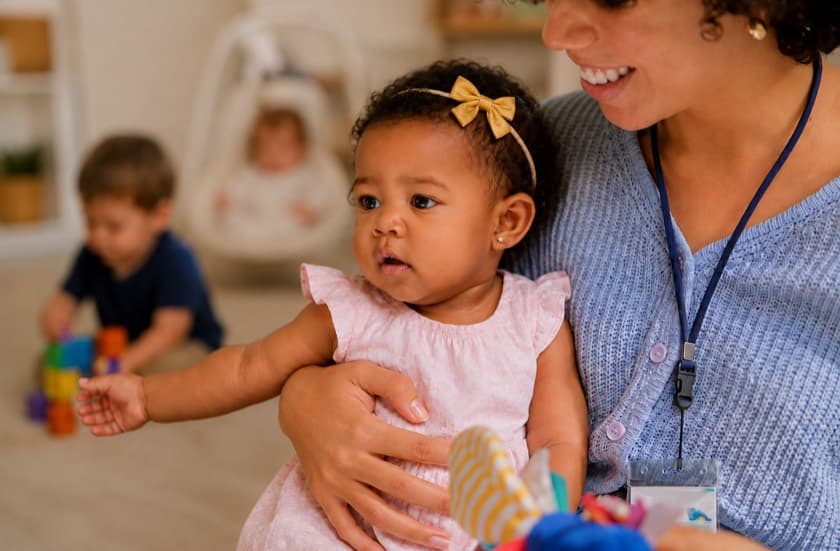
Early Care and Education
See the evidence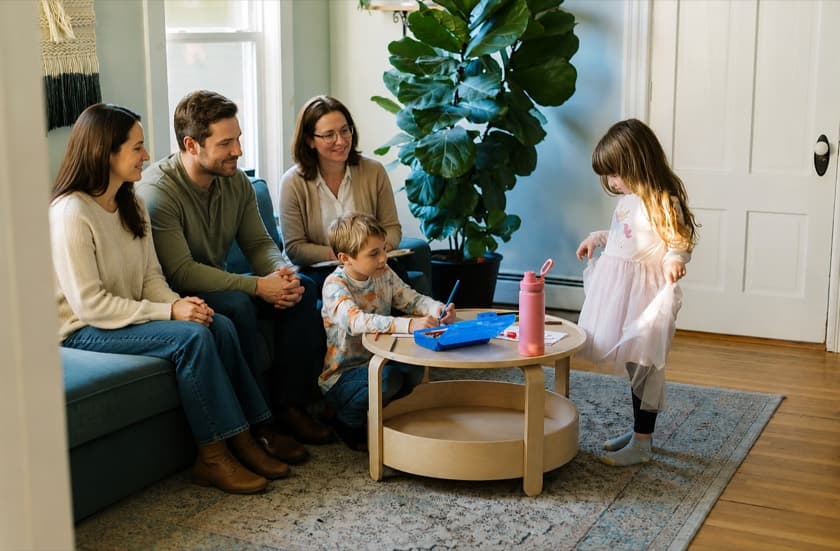
Home Visiting
See the evidence
Early Intervention
See the evidence
Child Welfare
See the evidence
Pediatric Primary Care
See the evidence
The full curriculum
We offer ten free, self-paced courses that run from defining the work to evaluating it. Anyone can take them, and you don't need an account.
- Strengthening Early Childhood ProgramsThis tutorial explains why mental health belongs in early childhood settings. It also shows what consultation changes in Head Start.
- Defining Early Childhood Mental Health ConsultationThis tutorial explains what consultation is and what it isn't. It also covers the consultant's role.
- The Effective Mental Health ConsultantThis tutorial covers who does this work and the competencies it takes. It also shows how to deliver high-quality services.
- Mastering the Consultative StanceThe consultative stance is what this work rests on. This tutorial shows how a consultant holds it in practice.
- Partnering with FamiliesThis tutorial treats family engagement as part of consultation practice. It covers how to set the stage for partnerships with families and how to strengthen them.
- Recognizing and Supporting Social Emotional DevelopmentThis tutorial covers social and emotional development from the first year through age five. It also covers risk factors and community referrals.
- Recognizing and Addressing TraumaThis tutorial explains trauma and how it affects young children. It covers the signs to watch for and the consultant's role.
- Developing a Vision and Strategic PlanThis tutorial shows how to turn a mental health vision into a program-level strategic plan and put it into practice.
- Implementing and Evaluating ECMHCThis tutorial covers job descriptions, hiring, contracts, workgroups, and continuous quality improvement.
- Cultural and Linguistic CompetenceThis tutorial looks at the cultural context of consultation and how to practice in a culturally responsive way.
Guides
Each guide gathers everything we've published on one subject into a single page you can read start to finish.
- Classroom ideas that hold big feelingsTeachers can use these classroom ideas right away. They cover emotions, friendship, problem solving, and handling disappointment.
- The IMH specialist suiteWhat infant mental health work is, what an IMH specialist does, and where to find specialized training.
- Five actions on maternal depressionFive actions for programs: identify families, train staff, use reflective supervision, connect families to care, and reduce stigma. Take them in order. The sequence is the intervention.
Help us expand the evidence base
We're growing our resources and research, and we want to work with researchers.
Key topics of focus:
- The impact of IECMHC in Home Visiting, EI, and Child Welfare
- The ROI of IECMHC and impact on staff turnover, expulsion and suspension rates
- The effectiveness of IECMHC consultants from non-clinical backgrounds
Become a Center of Excellence and Attunify certified consultant
Train with the team that wrote the national IECMHC competencies.