

Find the tool for your IECMHC needs
Our library holds 250+ free resources on IECMHC research and practice. Browse them below, or send us a tool, presentation, event, or paper to add.
Browse the library
Everything is free, and you don't need an account.
ReportExpulsion and Suspension in ECE as Matters of Social Justice and Health EquityThis discussion paper explores how inequities in early childhood systems lead to the “preschool to prison pipeline,” and provides food for thought regarding how IECMHC can disrupt this trend. ReportExpulsion prevention: Framework for the role of infant and early childhood mental health consultation in addressing implicit biasesPeer-reviewed article abstract GuideFinancing Guidance for IECMHC BriefFinancing Infant and Early Childhood Mental Health Consultation: Frequently Asked QuestionsThis brief answers some frequently asked questions about funding for infant and early childhood mental health consultation, which can be a complex and thorny issue. The questions address important topics like state financing, Medicaid support, how to request funding for IECMHC. Webinars and eventsFrom Conception to Birth: TN’s IECMHC Development"When you have the right people at the right time doing the right thing, magic happens.” The story of Tennessee’s IECMHC work is one of relationships. Though our state’s IECMHC work is still in its infancy, TN’s Infant Mental Health community has long been laying the foundation for what we are doing today. This workshop is for those involved in building systems and programs, those preparing to implement or in initial stages of program implementation, and IECMH or Early Childhood service providers. This workshop will detail: The history of TN’s Infant Mental Health work and explore the relationships, opportunities, and cross-sector partnerships that paved the way for IECMHC The role of the ZTT IECMH Financing Policy initiative in our IECMH work, state collaborative councils, and current partnerships at work in IECMH Consultation Coordinating Council The funding streams used Current IECMHC initiatives at the state and local level Program scale up and expansion as well as workforce recruitment and preparation How equity may be embedded in IECMHC, with an in-depth focus on family engagement, exclusionary discipline practices, and mitigating disproportionality What is on the horizon for IECMHC in Tennessee and lessons learned along the way BriefFunding Infant and Early Childhood Mental Health Consultation as a Medicaid Prevention Direct Service: Michigan’s ApproachState leaders can use this information to explore a process and lessons learned for supporting IECMHC as a Medicaid Prevention Direct Service. BriefFunding Infant and Early Childhood Mental Health Consultation: Lessons Learned from Arkansas’s Project PLAYThis brief describes how Arkansas funds Project PLAY through Child Care and Development Block Grant quality funds, and shares five lessons on financing IECMHC, from starting with a pilot to aligning with funders' priorities. Webinars and eventsGoing Deeper to Increase Self-Awareness and Culturally Responsive ServicesThe Jump Start Early Childhood Consultation Program is currently in its 5th year of implementation. It uses the Georgetown model, adapted to the unique challenges, population, and landscape of the Miami-Dade community. The goal of the program is to improve the capacity of childcare providers to address the social-emotional needs of young children in their care and, in turn, reduce the number of young children expelled from their centers. Empirical research demonstrates that children of color face disproportionate risks starting as early as preschool that can perpetuate a cycle of harmful long-term effects. For this reason, and the fact that the Miami-Dade community is very diverse, with non-Hispanic whites comprising only 11.5 % of the population (72.5 % Hispanic, 16% African American, Haitians and other groups), an important goal of the Jump Start Program is to embed equity, inclusion and cultural humility into all aspects of the work. The large Jump Start team includes 27 consultants who are culturally and linguistically representative of the population they serve. From the start increasing consultants’ awareness and ability to promote social and racial equity was a priority. Initially, didactic trainings from national experts were provided. However, it became clear that real impact needed deeper work. For the past 9 months, our team has partnered with the Indigo Cultural Center, having monthly dialogues around these important topics. Dr. Shivers and Ms. Johnston lead these monthly groups with Jump Start Supervisors and Equity Champions. The Champions, in turn, lead monthly groups with the rest of the consultants. In this presentation, the Jump Start Program’s model to increase staff’s awareness and ability to provide culturally responsive services will be discussed, including the process of selecting equity champions, their roles, and the parallel process as far as the impact this work has on teachers and children. The target audience for this presentation is all IECMH consultants and supervisors. It is our hope that this model can be replicated to propagate equity and inclusion across childcare centers and other early childhood programs. Webinars and eventsGrounding IECMHC in Early Relational Health to Create a Shared Purpose Webinars and eventsHand in Hand’s Parenting and Teaching for Social Justice A Model Learning CollaborativePlease join us for an experiential session where you will have the opportunity to try out a unique self-reflective practice tool that you can bring to your work with peers and mentors. We will also share our experience designing and leading a new equity-focused professional development curriculum: Hand in Hand Parenting’s Parenting and Teaching for Social Justice Learning Collaborative. Participants use this self-reflective practice tool to focus on healing from the impact of systemic oppression. Hand in Hand’s Learning Collaborative was organized to support our 250+ Certified Instructors who work with parents and early care and education professionals. The Learning Collaborative is focused on changing our own attitudes and tackling the emotional hurdles we face while working for justice. We work to heal from internalized oppression, so we can continue to reclaim confidence and power and enjoy our children and advocate for them, and we work to undo attitudes that fuel oppressive systems, so we can take intentional action and support the leadership of those who have been marginalized. Early Childhood Mental Health Consultants and others working with parents and early care and education professionals (Home Visitors, Head Start/Early Head Start educators, and Early Intervention providers) may be especially interested in this session. Webinars and eventsHead Start Mental Health Consultation modelTrauma exposure is common among populations served by Head Start. However, little is known about how to use the current Head Start Mental Health Consultation model to promote identification and response to early childhood trauma. This storytelling presentation will illustrate strategies employed to adapt the existing Mental Health Consultation model to support Head Start children with exposure to trauma. Our project qualitatively examined Head Start Mental Health consultant notes for 165 children who had known trauma exposure, suspected trauma exposure, any social services involvement, and/or were identified by teachers as engaging in aggressive behaviors. A content analysis was conducted to identify strategies for adapting the existing Head Start mental health consultation model to engage trauma-exposed families and address signs of potential trauma exposure (e.g., sexual behaviors, aggression). Findings included the following strategies: (1) preparing teachers and other school personnel for difficult discussions with parents about mental health, (2) psychoeducation about boundaries and appropriate touch, (3) teaching emotion regulation skills, and (4) trauma screening, brief intervention/psychoeducation, and referral to treatment. Our presentation highlights one story illustrating the adaptations made by consultants to meet the needs of a Head Start family experiencing recent intimate partner violence. It is our intent that this presentation be used to inform clinical adaptations to existing services provided by Head Start Mental Health Consultants and other early child Mental Health Consultation settings to improve early intervention services for trauma-exposed youth. GuideHead Start Performance Standards w/ Mental Health Focus
Core topics
For those who are ready to dig deeper than the IECMHC Basics, resources are clustered into the following five topic areas, which align with the core components of strong IECMHC programs and overall high-quality consultation services.
- Programs and ModelsThe nuts and bolts of IECMHC service delivery and IECMHC program infrastructure: what you provide, to whom, where, and how, and how to pull it all together.
- WorkforceThe competencies, training, supervision, mentoring, and quality assurance systems needed to build a strong IECMHC workforce.
- EquityStrategies and information to help IECMHC programs and consultants reduce disparities and promote effective, nurturing caregiving for all children.
- Research and EvaluationThe research base for IECMHC and guidance on developing and effectively utilizing theories of change, logic models, evaluation plans, and other research tools to measure IECMHC program fidelity and impact.
- Policy and FinancingTools and knowledge to support financing and sustaining IECMHC efforts, including key policies/initiatives, creative funding streams, and tips for strategic communication.
What the research shows in each setting
Consultation works in more than classrooms. See what the research shows in each place young children are served.
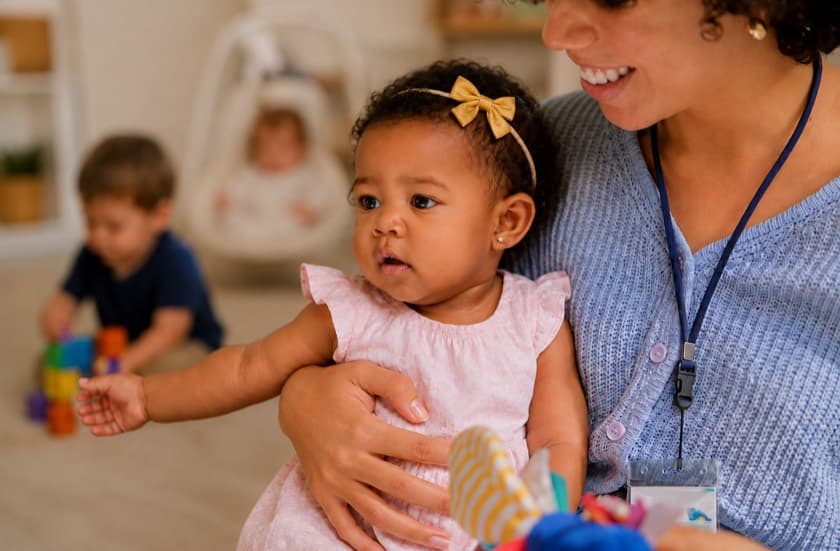
Early Care and Education
See the evidence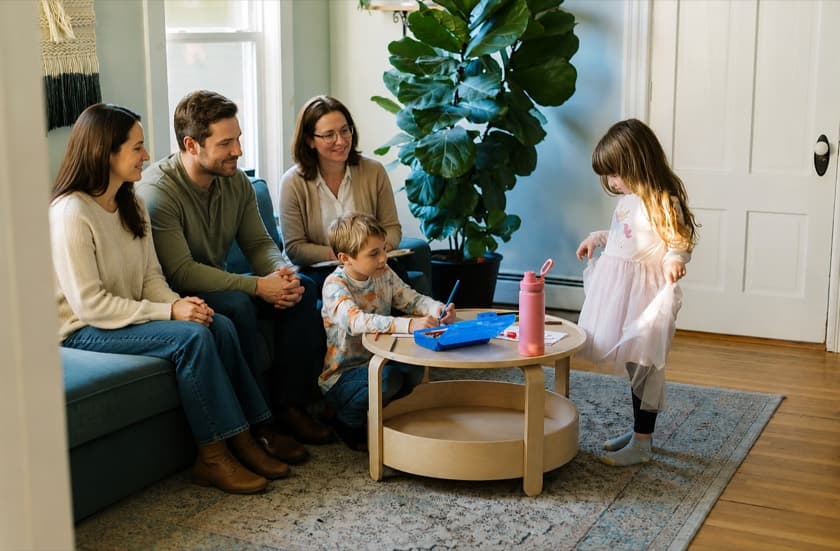
Home Visiting
See the evidence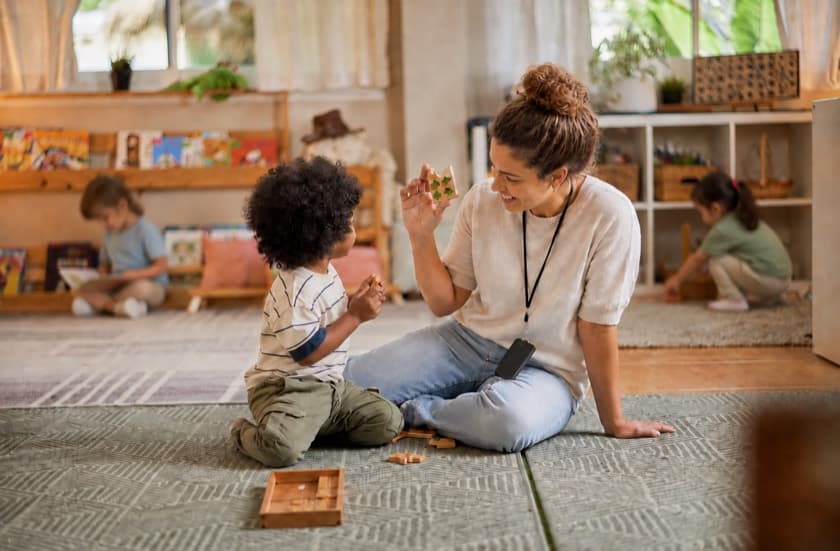
Early Intervention
See the evidence
Child Welfare
See the evidence
Pediatric Primary Care
See the evidence
The full curriculum
We offer ten free, self-paced courses that run from defining the work to evaluating it. Anyone can take them, and you don't need an account.
- Strengthening Early Childhood ProgramsThis tutorial explains why mental health belongs in early childhood settings. It also shows what consultation changes in Head Start.
- Defining Early Childhood Mental Health ConsultationThis tutorial explains what consultation is and what it isn't. It also covers the consultant's role.
- The Effective Mental Health ConsultantThis tutorial covers who does this work and the competencies it takes. It also shows how to deliver high-quality services.
- Mastering the Consultative StanceThe consultative stance is what this work rests on. This tutorial shows how a consultant holds it in practice.
- Partnering with FamiliesThis tutorial treats family engagement as part of consultation practice. It covers how to set the stage for partnerships with families and how to strengthen them.
- Recognizing and Supporting Social Emotional DevelopmentThis tutorial covers social and emotional development from the first year through age five. It also covers risk factors and community referrals.
- Recognizing and Addressing TraumaThis tutorial explains trauma and how it affects young children. It covers the signs to watch for and the consultant's role.
- Developing a Vision and Strategic PlanThis tutorial shows how to turn a mental health vision into a program-level strategic plan and put it into practice.
- Implementing and Evaluating ECMHCThis tutorial covers job descriptions, hiring, contracts, workgroups, and continuous quality improvement.
- Cultural and Linguistic CompetenceThis tutorial looks at the cultural context of consultation and how to practice in a culturally responsive way.
Guides
Each guide gathers everything we've published on one subject into a single page you can read start to finish.
- Classroom ideas that hold big feelingsTeachers can use these classroom ideas right away. They cover emotions, friendship, problem solving, and handling disappointment.
- The IMH specialist suiteWhat infant mental health work is, what an IMH specialist does, and where to find specialized training.
- Five actions on maternal depressionFive actions for programs: identify families, train staff, use reflective supervision, connect families to care, and reduce stigma. Take them in order. The sequence is the intervention.
Help us expand the evidence base
We're growing our resources and research, and we want to work with researchers.
Key topics of focus:
- The impact of IECMHC in Home Visiting, EI, and Child Welfare
- The ROI of IECMHC and impact on staff turnover, expulsion and suspension rates
- The effectiveness of IECMHC consultants from non-clinical backgrounds
Become a Center of Excellence and Attunify certified consultant
Train with the team that wrote the national IECMHC competencies.