

Find the tool for your IECMHC needs
Our library holds 250+ free resources on IECMHC research and practice. Browse them below, or send us a tool, presentation, event, or paper to add.
Browse the library
Everything is free, and you don't need an account.
ReportArizona’s Smart Support Evaluation Report: The First Four YearsExecutive Summary ReportArkansas Project PLAY Evaluation Update 2014 GuideBridging Infant and Early Childhood Mental Health Consultation to Direct Mental Health ServicesSupporting successful referrals is one of the core skill areas of mental health consultation. Mental health consultants are uniquely positioned to bridge consultees to needed direct mental health services. As infant and early childhood mental health professionals, consultants are aware of the powerful impact of the early years to a child’s healthy development. The strategies in this resource brief help to ensure a successful referral. Webinars and eventsBuilding a Successful Early Mental Health Consultation ProgramPlease join us for a brief overview of DC's Healthy Futures program Part 1: Building the Foundation Part 2: Creating Positive Partnerships Part 3: Expanding without Drifting Part 4: Testimonials Webinars and eventsBuilding a theory-driven evaluation of IECMHC: CoE Tips and ToolsThis workshop presentation will feature research and evaluation resources from the Center of Excellence for Infant and Early Childhood Mental Health Consultation (CoE for IECMHC), covering topics such as writing an IECMHC evaluation plan and measuring IECMHC. The workshop will show how a theory-driven evaluation can strengthen the existing evidence base and help shape future research and evaluation questions. HandoutCalming Strategies for Adults and ChildrenIn partnership with Illuminate Colorado and the University of California, San Francisco’s Child Trauma Research Program, the Thrive Center developed a set of handouts tailored for early care and education (ECE) settings. These handouts, available in English and Spanish, explore substance use and childhood trauma, and how ECE professionals can support the children and families they serve who are affected by these challenges. IECMH Consultants can share these short, colorful resources with their consultees to address these sensitive topics in an accessible, compassionate way. This specific handout provides helpful calming strategies for adults and children.Spanish GuideCentering Asian American, Native Hawaiian, and Pacific Islander Children, Families, and CommunitiesAsian American, Native Hawaiian, and Pacific Islander children and families need, and deserve, more opportunities to feel a sense of safety, connectedness, and belonging. These values are rooted in AANHPI families’ strengths and assets of community, family, and cultural pride. This resource offers strength-based strategies for IECMH consultants and programs to foster connection and belonging for AANHPI children and families amid heightened anti-Asian American, Native Hawaiian, and Pacific Islander hate, a global pandemic, and increasing socioeconomic challenges. Explore this resource to learn promising practices aligned with the Revised IECMHC Competencies to build safety, connectedness, and belonging for AANHPI children and families. See the webinar, Centering Asian American, Native Hawaiian, and Pacific Islander Children and Families to Combat Racial Bias and Promote Connection & Belonging in Infant and Early Childhood Mental Health Consultation that features a panel discussion on the importance of combating anti-AANHPI bias and promoting connection & belonging for IECMH consultants, supervisors, and leaders working with AANHPI children, families, and communities. Webinars and eventsCentering Families and Children Who Are Racially, Culturally and Linguistically DiverseThis workshop will provide information on how to interact, partner with, and value families and children who are culturally, racially, and linguistically diverse. Strategies will include (a) how to use self-assessment to improve diverse classroom experiences, (b) how to reach families where there is a perception of apathy, and (c) interactive strategies that deepen awareness and knowledge and improve skills. GuideCentering Latin American Children, Families and CommunitiesLatin American children and families represent diverse histories, lived experience, and unique needs and strengths. The tenets of anti-racist, trauma-informed, and culturally responsive practice applied to infant and early childhood mental health consultation (IECMHC) are paramount to nurturing these unique needs and strengths. Explore this resource to learn promising practices aligned with the Revised IECMHC Competencies to improve equity and care for Latin American children, families, and communities. See the webinar, Centering Latin American children, families, and communities through an anti-racist, trauma-informed, and culturally-responsive lens in IECMHC, that features a panel discussion on the importance of anti-racist, trauma-informed, and culturally-responsive practices for IECMH consultants, supervisors, and leaders working with Latin American children, families, and communities. GuideCentering Native American Children, Families, and CommunitiesNative American children, families, and communities need and deserve opportunities that cultivate connectedness and belonging to honor their strengths and to support their healing and well-being, given the tenuous and traumatic history endured through centuries of cultural erasure from colonization and resulting socioeconomic challenges experienced by Native American people today. Such connectedness and belonging is fostered through deeply rooted environmental, community, family, intergenerational, and spiritual connections. Explore this resource to learn promising practices aligned with the Revised IECMHC Competencies to foster connection to promote healing and well-being for Native American children, families, and communities. See the webinar, Centering Native American Children, Families, and Communities: Cultivating Connection to Promote Healing and Well-being through Infant and Early Childhood Mental Health Consultation that features a panel discussion on the importance of fostering connectedness and belonging to support healing and well-being for IECMH consultants, supervisors, and leaders working with Native American children, families, and communities. ReportCentering Racial Equity: Design Considerations for Oregon’s Statewide Infant and Early Childhood Mental Health Consultation (IECMHC) Program Webinars and eventsChallenging Behaviors and Beyond Webinar Series
Core topics
For those who are ready to dig deeper than the IECMHC Basics, resources are clustered into the following five topic areas, which align with the core components of strong IECMHC programs and overall high-quality consultation services.
- Programs and ModelsThe nuts and bolts of IECMHC service delivery and IECMHC program infrastructure: what you provide, to whom, where, and how, and how to pull it all together.
- WorkforceThe competencies, training, supervision, mentoring, and quality assurance systems needed to build a strong IECMHC workforce.
- EquityStrategies and information to help IECMHC programs and consultants reduce disparities and promote effective, nurturing caregiving for all children.
- Research and EvaluationThe research base for IECMHC and guidance on developing and effectively utilizing theories of change, logic models, evaluation plans, and other research tools to measure IECMHC program fidelity and impact.
- Policy and FinancingTools and knowledge to support financing and sustaining IECMHC efforts, including key policies/initiatives, creative funding streams, and tips for strategic communication.
What the research shows in each setting
Consultation works in more than classrooms. See what the research shows in each place young children are served.
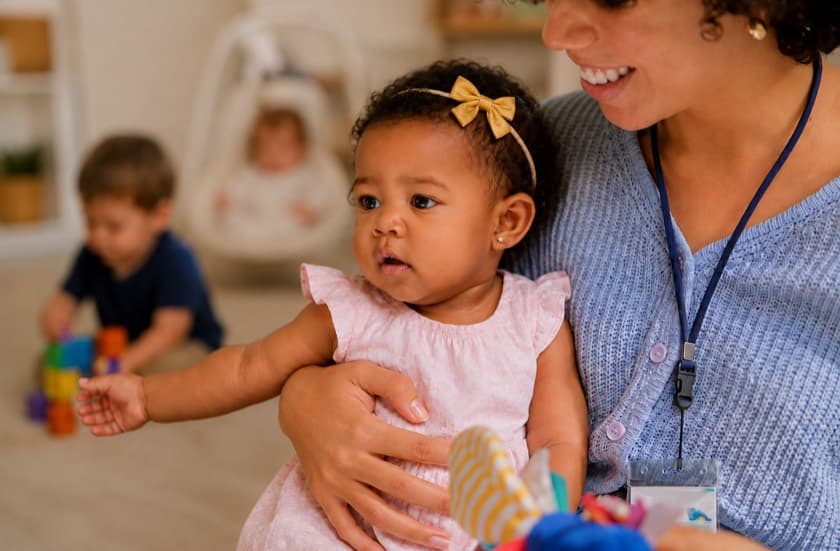
Early Care and Education
See the evidence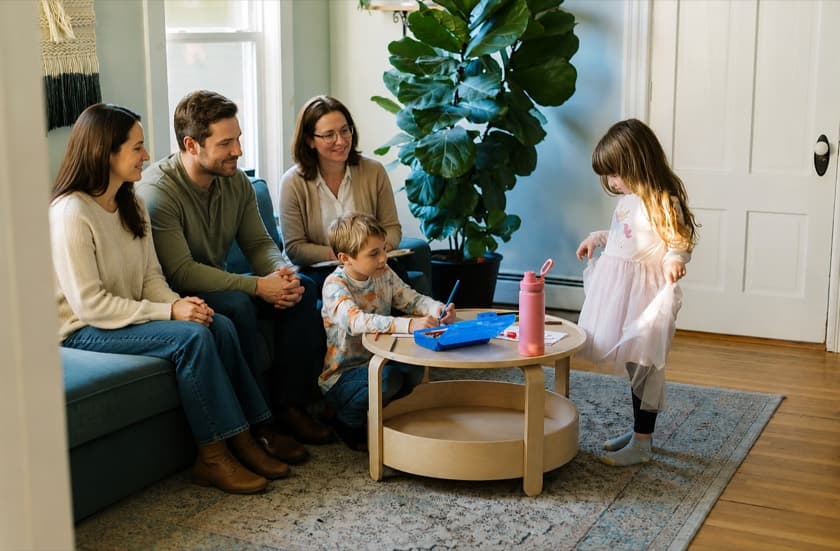
Home Visiting
See the evidence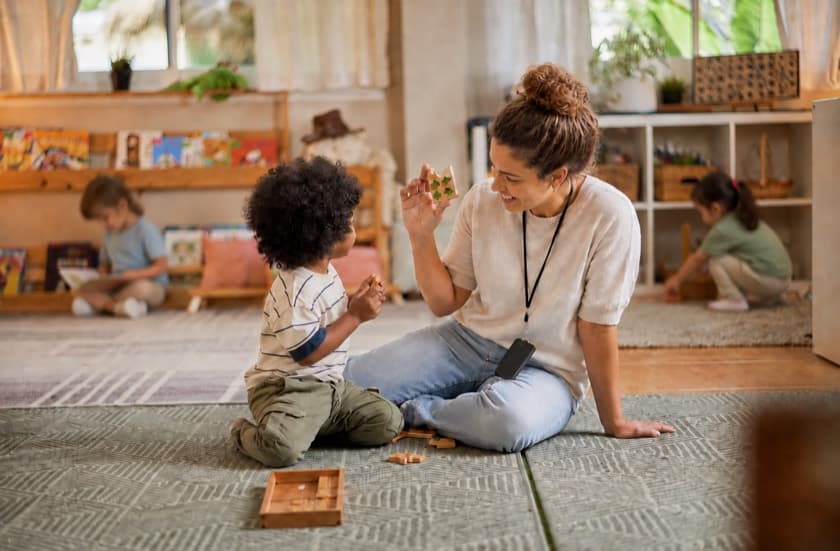
Early Intervention
See the evidence
Child Welfare
See the evidence
Pediatric Primary Care
See the evidence
The full curriculum
We offer ten free, self-paced courses that run from defining the work to evaluating it. Anyone can take them, and you don't need an account.
- Strengthening Early Childhood ProgramsThis tutorial explains why mental health belongs in early childhood settings. It also shows what consultation changes in Head Start.
- Defining Early Childhood Mental Health ConsultationThis tutorial explains what consultation is and what it isn't. It also covers the consultant's role.
- The Effective Mental Health ConsultantThis tutorial covers who does this work and the competencies it takes. It also shows how to deliver high-quality services.
- Mastering the Consultative StanceThe consultative stance is what this work rests on. This tutorial shows how a consultant holds it in practice.
- Partnering with FamiliesThis tutorial treats family engagement as part of consultation practice. It covers how to set the stage for partnerships with families and how to strengthen them.
- Recognizing and Supporting Social Emotional DevelopmentThis tutorial covers social and emotional development from the first year through age five. It also covers risk factors and community referrals.
- Recognizing and Addressing TraumaThis tutorial explains trauma and how it affects young children. It covers the signs to watch for and the consultant's role.
- Developing a Vision and Strategic PlanThis tutorial shows how to turn a mental health vision into a program-level strategic plan and put it into practice.
- Implementing and Evaluating ECMHCThis tutorial covers job descriptions, hiring, contracts, workgroups, and continuous quality improvement.
- Cultural and Linguistic CompetenceThis tutorial looks at the cultural context of consultation and how to practice in a culturally responsive way.
Guides
Each guide gathers everything we've published on one subject into a single page you can read start to finish.
- Classroom ideas that hold big feelingsTeachers can use these classroom ideas right away. They cover emotions, friendship, problem solving, and handling disappointment.
- The IMH specialist suiteWhat infant mental health work is, what an IMH specialist does, and where to find specialized training.
- Five actions on maternal depressionFive actions for programs: identify families, train staff, use reflective supervision, connect families to care, and reduce stigma. Take them in order. The sequence is the intervention.
Help us expand the evidence base
We're growing our resources and research, and we want to work with researchers.
Key topics of focus:
- The impact of IECMHC in Home Visiting, EI, and Child Welfare
- The ROI of IECMHC and impact on staff turnover, expulsion and suspension rates
- The effectiveness of IECMHC consultants from non-clinical backgrounds
Become a Center of Excellence and Attunify certified consultant
Train with the team that wrote the national IECMHC competencies.