

Find the tool for your IECMHC needs
Our library holds 250+ free resources on IECMHC research and practice. Browse them below, or send us a tool, presentation, event, or paper to add.
Browse the library
Everything is free, and you don't need an account.
ReportThe Evidence Base for How and Why Infant and Early Childhood Mental Health Consultation WorksThis article reviews the evidence base for Infant and Early Childhood Mental Health Consultation (IECMHC) and organizes the literature based on alignment with the CoE’s theory of change. The authors describe the current state of evidence for IECMHC, identify gaps in the literature, outline future research directions, and provide a call to action. GuideThe Georgetown Manual for School-Based Early Childhood Mental Health Consultation ServicesThis manual describes a framework to the provision of ECMHC in school settings. Georgetown University Center for Child and Human Development articulated this framework for ECMHC as implemented in a pilot program in a DC charter school for Pre-K 3- and 4-year-old classrooms. ECMHC services are organized into phases and described at multiple levels: child-/family-focused, classroom-focused, and programmatic consultation. The Appendix contains foundational materials describing the GU practice-based principles for ECMHC as well as tools to gather ECMHC data on children and classrooms. This document is intended as a resource that could aid other programs in the development of their manuals, though program manuals go beyond this content to also include site-specific implementation details. GuideThe Georgetown Model of Early Childhood Mental Health Consultation for School-Based Settings Webinars and eventsThe Impact of Teacher Stress on IECMHC Outcomes and Lessons Learned Through Program EvaluationThis presentation will describe recent program evaluation findings of the statewide TIKES IECMHC program in Louisiana. TIKES examined how teachers’ perceptions of children’s behavior and the behavior of the whole class changed after working with a TIKES consultant. After six months of participating in the TIKES IECMHC model of consultation, teachers reported increases in child protective factors, decreases in child and classroom behavioral concerns including behaviors related to increased likelihood of expulsion, and decreases in their levels of stress and hopelessness after consultation. Notably, pre-consultation teacher stress was related to their perception of child behavior, with teachers reporting moderate to high levels of stress demonstrating changes in their perception of challenging behaviors. This research highlights the importance of recognizing and responding to early childhood educators’ needs and stress levels, with particular emphasis on the impact of the identities they hold, so that they can provide high quality care for infant and young children. We will also discuss how TIKES research findings inform our work and are an integral part of our model. We will highlight earlier research on ECE educator stress, its causes, and its impact on young children, especially on teacher-child relationships and on disparities in suspension and expulsion. Importantly, the researchers will discuss lessons learned related to appropriate methods of measuring demographic variables such as race and gender in teacher-reported program evaluation to better capture the mechanism by which IECMHC impacts the diverse consultees that the TIKES program serves. We believe this presentation will be of interest to program evaluators, program directors, and mental health consultants interested in learning more about how IECMHC and IECMHC evaluation works. ReportThe Implementation of a Statewide Reflective Supervision Consultation Model for Infant-Early Childhood Program Professionals, Supervisors and Program Managers: Pilot Evaluation Report ReportThe San Francisco Early Childhood Mental Health Consultation Initiative (ECMHCI) Evaluation: Community Experiences (2021-2022) Webinars and eventsTracing three parallel histories of IECMHC in SF and their impact on equity todaySan Francisco’s IECMHC (SF-ECMHC) Initiative is recognized for its grounding in cultural practice and cultural communities and for holding lasting consultation relationships. We present data for how equity from the start of an initiative can impact the development of a diverse IECMHC workforce. We illustrate the initiative’s maintained dedication to cultural communities by employing consultants who mirror those communities and share the impact of consultant-consultee match on IECMHC outcomes. We acknowledge the ‘Sankofa Effect’: looking back to move forward. We look back on the distinct, parallel histories of the SF-ECMHC Initiative, which are deeply connected to equity and cultural communities. We highlight the history of Instituto Familiar de la Raza’s (Instituto) and the establishment of the Proveedora Program in 1986 to meet the needs of the Chicano/Latino community, many of whom experienced traumas from immigrating amid Central America’s civil war and were not accustomed to child care provided by "strangers." Finally, we explain why the consultant-consultee match builds stronger, more effective consultation, drawing on concepts like power, lived experience, and collectivism. BriefTraining and Workforce Development Activities that Prepare and Support IECMH ConsultantsDescribes a range of opportunities and approaches to MHC training, broken down by practice environments and targeted to different levels of MHC experience Webinars and eventsTransforming Narratives: Storytelling for Equity, Reflection, and EmpowermentStorytelling can transform IECMH Consultation by deepening reflective capacity, connections, and resilience. Each of us is full of stories worth telling. What, when and how we choose to tell stories matters. Join us to experience claiming and sharing your own story as a reflective and connective practice. Webinars and eventsUnlocking Our Implicit Biases Regarding Parenting Practices to Deepen Relations With FamiliesExplore parenting practices from cultures worldwide and which of these practices triggers implicit biases. Develop a deeper understanding of the “why” behind various parenting practices and the diverse families entering your program. Learn strategies to build relationships with families while embracing cultural differences and helping families better understand your program. All too often, implicit bias is at the root of issues for Black and Brown children and their families. The immediate assumptions that are made regarding intelligence or ability simply from initial impressions have a far-reaching negative reach. As we have seen in higher maternal death rates for Black and Brown women and higher rates of expulsions/ special education referrals for Black and Brown boys, the White professionals working with a BIPOC population are still needing additional education surrounding their ability to identify their own implicit biases in order to ensure these biases do not play a role in their work. In this presentation, I challenge participants to examine their implicit biases surrounding parenting practices. When educators, especially caregivers working with very young children, bring in their set of beliefs as the “right” way to do something, it results in negating the cultural preferences or beliefs of the family they are working with. My goal is to have participants see color, see the unique differences between families’ parenting practices, and value these practices, especially when they differ from what the participants believe. I want participants to leave this session with a greater understanding and respect for parenting practices that are widely accepted in other social settings so that participants can better understand and guide conversations with families from a different culture in the future. Ultimately, this partnership based on understanding and acceptance will lead to the best understanding of what the child needs in order to reach their full potential. Webinars and eventsUnveiling the Essential IECMHC Activities for Promoting Equity and RelationshipsThis workshop showcases the results of a consensus-building study that defined the core IECMHC activities, emphasizing relationships and equity. Using the Delphi method, experts reached a consensus on essential elements and activities of IECMHC, yielding a list of five essential elements and 27 activities. Panelists rated them, achieving an 80% consensus for all elements and most activities. The resulting Essential IECMHC Activities list guides practitioners, integrating consultation's "what" and "how" with a consultative stance. This list promotes equity and clarity in services. The workshop will present findings and encourage attendees to implement equity-promoting actions in their practices, supporting diverse infants and children's social-emotional well-being. Overall, it offers a deep dive into IECMHC activities and their role in equity. Webinars and eventsUsing Qualitative Data to Elevate Stakeholder Voices in Virginia’s ECMHC PilotThis workshop explores how qualitative research and evaluation can promote equity in early childhood mental health consultation (ECMHC). Often when programs and services are designed, they do not draw on lived experiences of the communities they serve which continues to promote deficit ideas about children, families, and their communities, particularly for children and families of color (O'Cathain et al., 2019). This workshop will show how qualitative research can strengthen programs and services by incorporating the voices of the communities that they are designed for. VDOE allocated federal relief dollars to fund an ECMHC pilot in early care and education (ECE) classrooms during the 2022-2023 school year in Virginia with three key objectives. The pilot was to aid ECE teachers in supporting children’s social-emotional needs in response to COVID-19, prevent suspensions and expulsions, and explore the feasibility of expanding the pilot to an eventual statewide ECMHC model (Partee et al, 2023). To understand implementation of the Virginia ECMHC pilot, we collected data using both qualitative and quantitative methods. In this presentation we will share findings and experiences from the qualitative strand of the study, specifically focusing on the insights gathered through video-cued focus groups and interviews with teachers, program directors, and families of children who received ECMHC services.
Core topics
For those who are ready to dig deeper than the IECMHC Basics, resources are clustered into the following five topic areas, which align with the core components of strong IECMHC programs and overall high-quality consultation services.
- Programs and ModelsThe nuts and bolts of IECMHC service delivery and IECMHC program infrastructure: what you provide, to whom, where, and how, and how to pull it all together.
- WorkforceThe competencies, training, supervision, mentoring, and quality assurance systems needed to build a strong IECMHC workforce.
- EquityStrategies and information to help IECMHC programs and consultants reduce disparities and promote effective, nurturing caregiving for all children.
- Research and EvaluationThe research base for IECMHC and guidance on developing and effectively utilizing theories of change, logic models, evaluation plans, and other research tools to measure IECMHC program fidelity and impact.
- Policy and FinancingTools and knowledge to support financing and sustaining IECMHC efforts, including key policies/initiatives, creative funding streams, and tips for strategic communication.
What the research shows in each setting
Consultation works in more than classrooms. See what the research shows in each place young children are served.
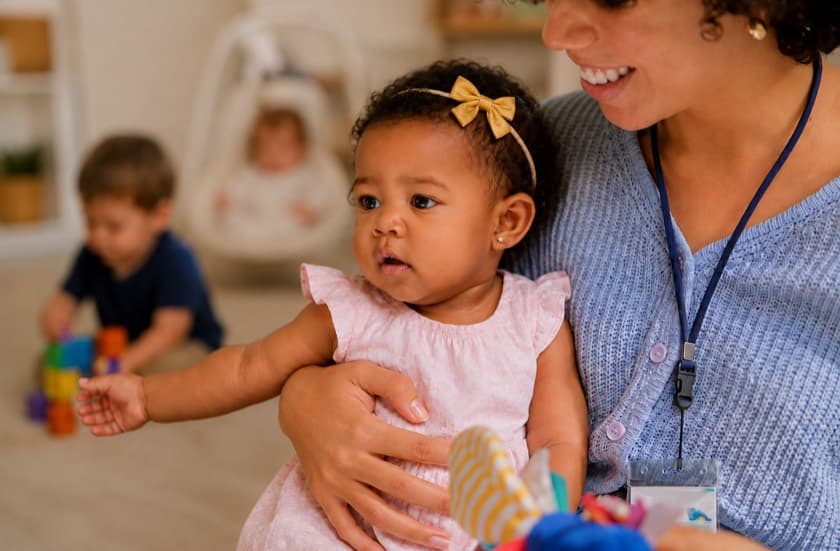
Early Care and Education
See the evidence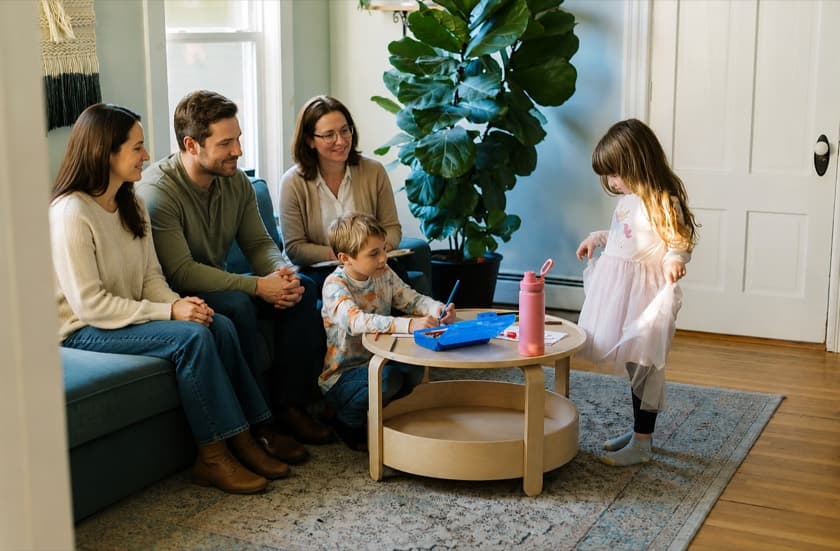
Home Visiting
See the evidence
Early Intervention
See the evidence
Child Welfare
See the evidence
Pediatric Primary Care
See the evidence
The full curriculum
We offer ten free, self-paced courses that run from defining the work to evaluating it. Anyone can take them, and you don't need an account.
- Strengthening Early Childhood ProgramsThis tutorial explains why mental health belongs in early childhood settings. It also shows what consultation changes in Head Start.
- Defining Early Childhood Mental Health ConsultationThis tutorial explains what consultation is and what it isn't. It also covers the consultant's role.
- The Effective Mental Health ConsultantThis tutorial covers who does this work and the competencies it takes. It also shows how to deliver high-quality services.
- Mastering the Consultative StanceThe consultative stance is what this work rests on. This tutorial shows how a consultant holds it in practice.
- Partnering with FamiliesThis tutorial treats family engagement as part of consultation practice. It covers how to set the stage for partnerships with families and how to strengthen them.
- Recognizing and Supporting Social Emotional DevelopmentThis tutorial covers social and emotional development from the first year through age five. It also covers risk factors and community referrals.
- Recognizing and Addressing TraumaThis tutorial explains trauma and how it affects young children. It covers the signs to watch for and the consultant's role.
- Developing a Vision and Strategic PlanThis tutorial shows how to turn a mental health vision into a program-level strategic plan and put it into practice.
- Implementing and Evaluating ECMHCThis tutorial covers job descriptions, hiring, contracts, workgroups, and continuous quality improvement.
- Cultural and Linguistic CompetenceThis tutorial looks at the cultural context of consultation and how to practice in a culturally responsive way.
Guides
Each guide gathers everything we've published on one subject into a single page you can read start to finish.
- Classroom ideas that hold big feelingsTeachers can use these classroom ideas right away. They cover emotions, friendship, problem solving, and handling disappointment.
- The IMH specialist suiteWhat infant mental health work is, what an IMH specialist does, and where to find specialized training.
- Five actions on maternal depressionFive actions for programs: identify families, train staff, use reflective supervision, connect families to care, and reduce stigma. Take them in order. The sequence is the intervention.
Help us expand the evidence base
We're growing our resources and research, and we want to work with researchers.
Key topics of focus:
- The impact of IECMHC in Home Visiting, EI, and Child Welfare
- The ROI of IECMHC and impact on staff turnover, expulsion and suspension rates
- The effectiveness of IECMHC consultants from non-clinical backgrounds
Become a Center of Excellence and Attunify certified consultant
Train with the team that wrote the national IECMHC competencies.