

Find the tool for your IECMHC needs
Our library holds 250+ free resources on IECMHC research and practice. Browse them below, or send us a tool, presentation, event, or paper to add.
Browse the library
Everything is free, and you don't need an account.
GuideKey IECMHC Resources for Tribal CommunitiesThis resource provides resources for tribal, state, and community leaders seeking to implement IECMHC within tribal communities. GuideKey Resources for Promoting Equity and Reducing DisparitiesThis compendium of Web-based equity-focused resources provides support for state, tribal, and community leaders who are engaged in conversations about disproportionate data on preschool expulsions and for awareness building. Webinars and eventsLeading An Equitable IECMH TeamA brief narrative session talking about how managers in the IECMH field can improve efficiency and increase equity within their teams. Strategies and Observations are shared from the experience of A Disability Director in a large Urban & Rural Head Start Program. Webinars and eventsLinking IECMHC with Mental Health Professional Development and Why it MattersJoin me as I explore how training as a mental health professional supports the work of an Infant/Early Childhood Mental Health Consultant. What clinical skills are used in the everyday work of an IECMHC? How does clinical training inform the IECMHC in conceptualizing each unique situation and forming next steps? Does an IECMHC need to be trained as a mental health professional to do this work? I invite you to reflect with me as the need for IECMHCs continues to increase, yet the availability of viable candidates remains a challenge. TemplateLogic Model ReportMaryland ECMHC Evaluation: Final Report (2011)Maryland ECMHC Evaluation: Executive Summary (2011) GuideMaryland Infant & Early Childhood Mental Health Support Services Program: Practice Standards & Recommendations Webinars and eventsMaryland’s Equity Mapping ProjectIn the IECMHC field, it is well known that Black boys in early childhood settings are suspended or expelled at much higher rates than their White counterparts, and IECMHC is linked with reduced suspension and expulsion rates. However, less attention is paid to where IECMHC services are provided, who is included, and who is left out. To ensure the gap between Black and White children’s suspension and expulsion rates does not further widen, the Parent, Infant, Early Childhood (PIEC) team completed an equity mapping research project for Maryland’s IECMHC programs. The aim of this work was to identify where IECMHC services were delivered across Maryland in the context of where child care programs are located and historically underserved children, including Black and Latinx children and children in poverty lived, from July 2017 through December 2020. During the presentation, we will explore both the static maps that overlay where IECMH consultation services were provided in the context of the socio-demographic and childcare data for the state. We will also share the reflective questions programs use when reviewing the maps. These reflective questions are aimed to help participants explore trends in the distribution of services; discuss root causes for existing inequities; and think of recommendations at the programmatic and systems level. Our target audiences are IECMH consultants, IECMH program directors, researchers, policymakers, funders, and any others who are interested in IECMH and equity in IECMH services. BriefMaryland’s Infant & Early Childhood Mental Health Consultation Fiscal Year 2020 Brief BriefMaryland’s Infant & Early Childhood Mental Health Consultation Fiscal Year 2021 Brief ReportMaryland’s infant and early childhood mental health consultation equity efforts Webinars and eventsMeeting Colorado Families and Early Childhood Professionals where they areColorado offers ECMH Consultation services anywhere children age birth to 6 years learn and grow, including elementary schools, home visitation, child welfare, public health, health care, home settings, and more. This presentation will discuss how consultation has been expanded and successfully implemented in settings outside childcare. Two settings with established programs will discuss how the need for early childhood mental health consultation was determined and what programming resulted from those needs. Featured programs include Enhanced Home Visiting and Warm Connections which offers mental health consultation at Woman, Infants and Children (WIC) clinics. The demographics of the families and professionals served will be highlighted along with how each program has incorporated practices and policies that are culturally and linguistically responsive. Programs will also address the workforce providing the consultation: how they were recruited and trained. Programs will also discuss their components, barriers, and opportunities. Finally, evaluation results and learnings will be shared which highlight program future directions.
Core topics
For those who are ready to dig deeper than the IECMHC Basics, resources are clustered into the following five topic areas, which align with the core components of strong IECMHC programs and overall high-quality consultation services.
- Programs and ModelsThe nuts and bolts of IECMHC service delivery and IECMHC program infrastructure: what you provide, to whom, where, and how, and how to pull it all together.
- WorkforceThe competencies, training, supervision, mentoring, and quality assurance systems needed to build a strong IECMHC workforce.
- EquityStrategies and information to help IECMHC programs and consultants reduce disparities and promote effective, nurturing caregiving for all children.
- Research and EvaluationThe research base for IECMHC and guidance on developing and effectively utilizing theories of change, logic models, evaluation plans, and other research tools to measure IECMHC program fidelity and impact.
- Policy and FinancingTools and knowledge to support financing and sustaining IECMHC efforts, including key policies/initiatives, creative funding streams, and tips for strategic communication.
What the research shows in each setting
Consultation works in more than classrooms. See what the research shows in each place young children are served.
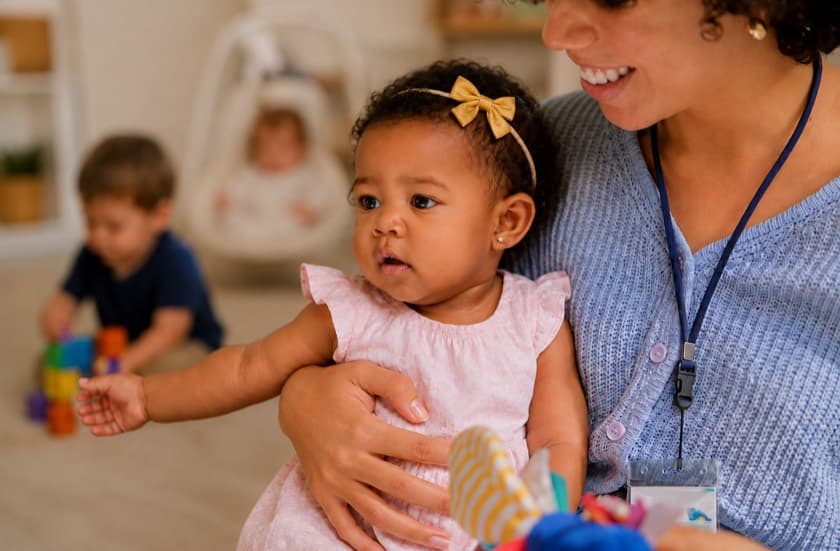
Early Care and Education
See the evidence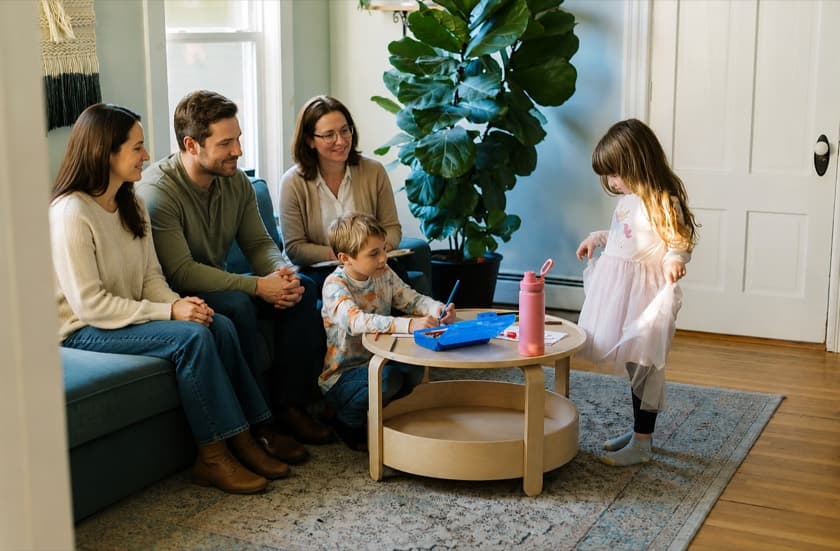
Home Visiting
See the evidence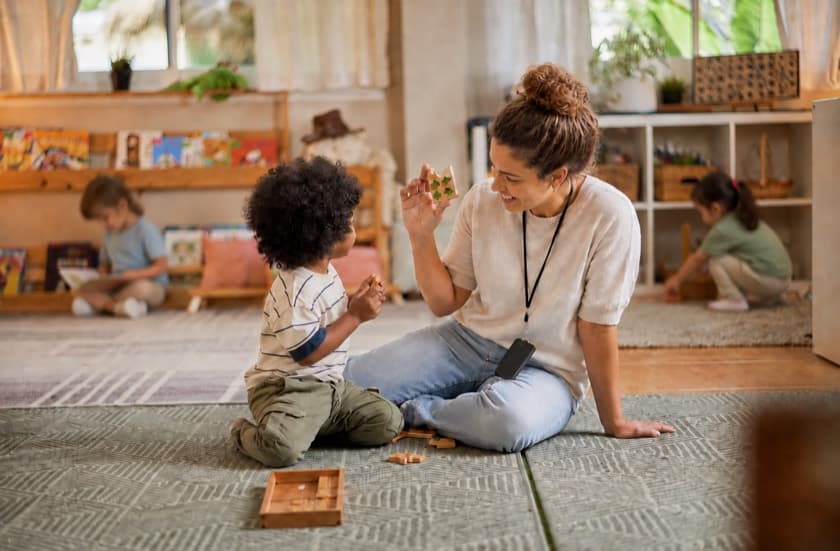
Early Intervention
See the evidence
Child Welfare
See the evidence
Pediatric Primary Care
See the evidence
The full curriculum
We offer ten free, self-paced courses that run from defining the work to evaluating it. Anyone can take them, and you don't need an account.
- Strengthening Early Childhood ProgramsThis tutorial explains why mental health belongs in early childhood settings. It also shows what consultation changes in Head Start.
- Defining Early Childhood Mental Health ConsultationThis tutorial explains what consultation is and what it isn't. It also covers the consultant's role.
- The Effective Mental Health ConsultantThis tutorial covers who does this work and the competencies it takes. It also shows how to deliver high-quality services.
- Mastering the Consultative StanceThe consultative stance is what this work rests on. This tutorial shows how a consultant holds it in practice.
- Partnering with FamiliesThis tutorial treats family engagement as part of consultation practice. It covers how to set the stage for partnerships with families and how to strengthen them.
- Recognizing and Supporting Social Emotional DevelopmentThis tutorial covers social and emotional development from the first year through age five. It also covers risk factors and community referrals.
- Recognizing and Addressing TraumaThis tutorial explains trauma and how it affects young children. It covers the signs to watch for and the consultant's role.
- Developing a Vision and Strategic PlanThis tutorial shows how to turn a mental health vision into a program-level strategic plan and put it into practice.
- Implementing and Evaluating ECMHCThis tutorial covers job descriptions, hiring, contracts, workgroups, and continuous quality improvement.
- Cultural and Linguistic CompetenceThis tutorial looks at the cultural context of consultation and how to practice in a culturally responsive way.
Guides
Each guide gathers everything we've published on one subject into a single page you can read start to finish.
- Classroom ideas that hold big feelingsTeachers can use these classroom ideas right away. They cover emotions, friendship, problem solving, and handling disappointment.
- The IMH specialist suiteWhat infant mental health work is, what an IMH specialist does, and where to find specialized training.
- Five actions on maternal depressionFive actions for programs: identify families, train staff, use reflective supervision, connect families to care, and reduce stigma. Take them in order. The sequence is the intervention.
Help us expand the evidence base
We're growing our resources and research, and we want to work with researchers.
Key topics of focus:
- The impact of IECMHC in Home Visiting, EI, and Child Welfare
- The ROI of IECMHC and impact on staff turnover, expulsion and suspension rates
- The effectiveness of IECMHC consultants from non-clinical backgrounds
Become a Center of Excellence and Attunify certified consultant
Train with the team that wrote the national IECMHC competencies.