
Lesson 2The Child
It's always fun to talk about babies and toddlers...
Mary Mackrain
A Moment of Reflection:
On a piece of paper, write down as many social emotional milestones you can think of based on the previous activity. See how many you can list in 30 seconds.
Below are some responses received during this exercise
- Smiles
- Eye contact
- Giggles
- Crying, showing this array of emotion
- Screaming
- looking around, showing observant behavior- a level of interest in the world
- trying to mouth everything
- Holding things, like caregivers hair or finger
- Looking at faces
- Cooing
- Showing an interest in the environment
- Pointing
Moment of reflection
On a piece of paper, list some of your observations on the below image, only what you see

What do you observe?
When we think about Attachment, what are some milestones associated with each age group?
Infant (0-18 Months)
- Smiles at and back to a familiar caregiver
- Anticipates being held or fed
- Prefers parent or caregivers face and voice
- Engages in eye contact
- Shows preference for a familiar caregiver
- Shows hesitance with new adults
Toddler (18-36 months)
- Explores but checks in with a familiar caregiver
- Makes needs know to a familiar caregiver
- Shows affection to familiar caregiver
Self- Regulation
The ability to control emotions and behaviors in order to cope effectively with environmental demands. "
When we think about Self Regulation , what are some milestones associated with each age group?
Infant (0-18 Months)
- Cries when upset
- Comforted with help from a familiar adult
- Shows excitement, joy, sadness, etc
- May begin to comfort self with thumb, blanket
- Laughs out loud
- Reacts to changes in daily routine
Toddler (18-36 months)
- May show increased fearfulness
- Growing awareness of own feelings and those of others
- May protest and say “No” more often
Moment of reflection
On your piece of paper call out one or two behaviors that you see Jamal engaging in to show a bit of self regulation.
When we think about Explore and Learn, what are some milestones associated with each age group?
Infant (0-18 Months)
- Observes own hands
- Reaches for and grasps things
- Enjoys simple games like peek-a-boo
- Smiles or plays with self in mirror
- Imitates others actions
- Enjoys looking at picture books with caregiver
Toddler (18-36 months)
- Interest in playthings and people
- Plays alongside peers
- Keeps looking for an object out of view
Read the transcript
This transcript was made from the recording by software. It may have small errors.
So I wanted to just call out a couple of my favorite milestone tools. Maybe you all use some of these, but I would love if you would share with your peers, what are some of your favorite milestone tools that you use with providers, or maybe your own primary care provider has used some of these resources with you? These are all free resources that you can use by next Tuesday.
To use in an observation. You could talk about it during your next visit. So for instance, the Center for Disease Control and Prevention has these three milestone forms that come in English and Spanish. They cover two months, four months, six months, and so forth. And it includes the most common milestones that you would expect at that age. And it includes a component for social and emotional health. Around act early if you notice some of these more common risk factors.
Help Me Grow has an app and milestone resources for families and care providers around common developmental milestones at newborn two months of age, three months of age, and so forth. They're lovely. They're easy to understand. And probably one of my favorites is zero to three milestone the magic of everyday moments. So if you haven't looked at these for a while, I would take it out. There are lovely snapshots from the child's viewpoint talking about what they need in their own development that are really lovely to use with caregivers during training, during observation, and so forth.
So I'm going to pause here. We're going to move next into the, a little bit more into what gets in the way of social and emotional health. And development but any favorite resources that you all have related to social and emotional milestones I'm going to just take a pause and feel free to share some of your favorites here too
Learn about milestone tools you can use!
tools featured below
links to the PDF version provided in English and Spanish below
Important Milestones: Your Baby By Two Months
How your child plays, learns, speaks, acts, and moves offers important clues about your child’s development. Developmental milestones are things most children can do by a certain age.
Check the milestones your child has reached by the end of 2 months by completing a checklist with CDC’s free Milestone Tracker mobile app, for iOS and Android devices, or by printing the checklist below. Take the checklist with you and talk with your child’s doctor at every visit about the milestones your child has reached and what to expect next.
Important Milestones Your Baby By Two Months (English) (PDF)
Important Milestones Your Baby By Two Months (Spanish) (PDF)
link to downloadable infographic below
Help Me Grow: Developmental Milestones
Help Me Grow has many resources for parents and professionals about the development of young children. These resources include information on developmental milestones, YouTube videos, caregiver strategies to support development, screening and evaluation, and how to talk about developmental concerns.
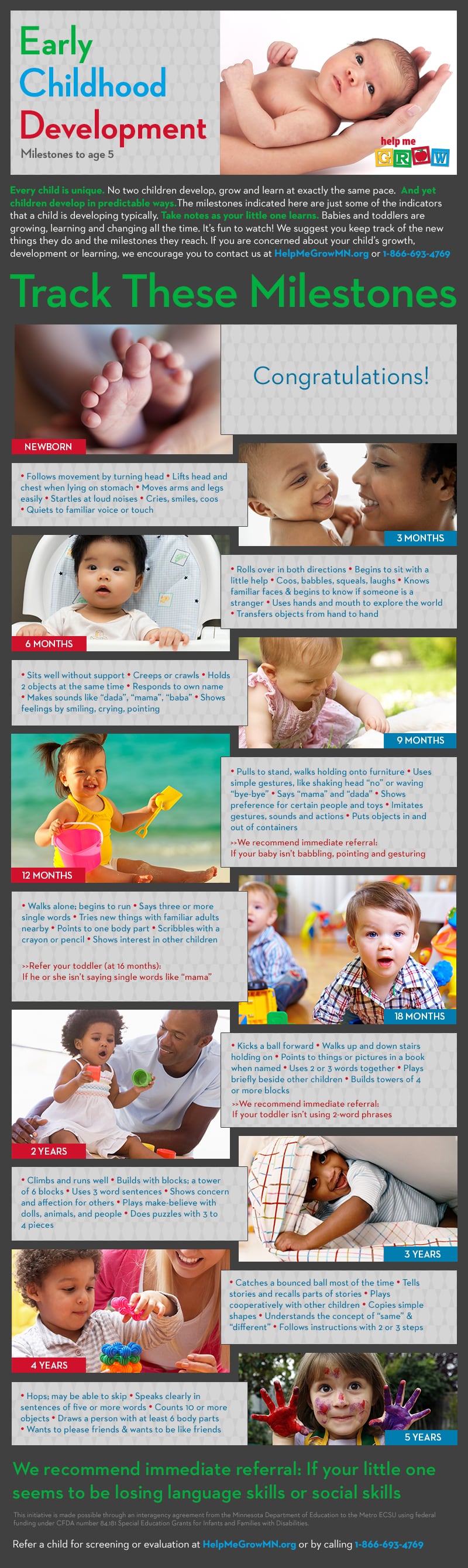
Link to PDF below
12–15 Months: Your Child’s Development
They watch their loved ones very carefully and copy a lot of what they see. This is one of the most important ways toddlers learn how the world works. How do you see your 12- to 15-month-old learning from watching you?
What Your Toddler Can Do/ What You Can Do
| I’m moving! | Give your child just enough help to reach his goal. |
| I’m starting to talk and understand so much more. | Choose books about things that interest your child and make efforts to build his vocabulary. |
| I want to do more for myself. | Follow your child’s lead and involve her in self-help tasks. |
| I love to imitate. | Join in your child’s play. |
12–15 Months Your Child’s Development (PDF)
Changing the Key Question
“What’s wrong with this child?”
TO
“What’s happened in this child’s life?”
Read the transcript
This transcript was made from the recording by software. It may have small errors.
In our work. We're the ones that are coming with that mental health lens and expertise. We know that high levels of stress or trauma can have a potential impact on our brain functioning every single day. Some of you, I hope you haven't, but some of you may have, you know, had a bad sleep last night, something stressful is happening in life, and you know how that impacts your day.
You might forget your keys. You may not run a meeting as well as you normally would. The way that our brain functions on stress is not as efficient. So when we look at the areas of the brain that are lit up to the left in the stress brain state, you can see that oftentimes we can operate, babies and toddlers can operate in that survival brain mode, fight or flight or stress, high reaction, high emotion.
In activities that can really bring in that attunement and that calming, we can help children to really begin to use that more executive officer, that prefrontal cortex, to really problem-solve, engage with the world, and really be part of the day-to-day in a less stressed state. So how we choose to support a child can make a really big impact on the overall outcome.
Potential Impact on Functioning
graphic below is Used with Permission,
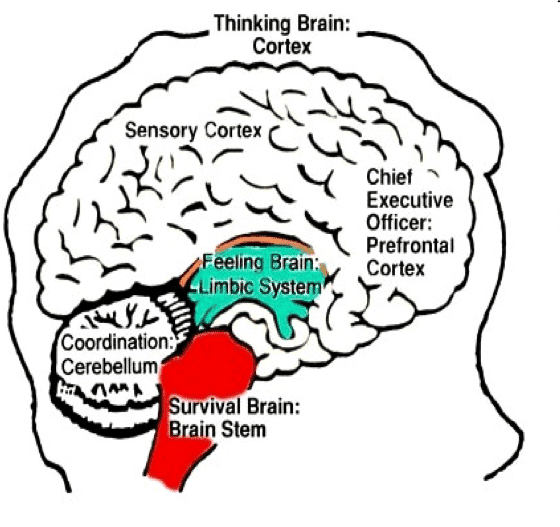
Stressed Brain State
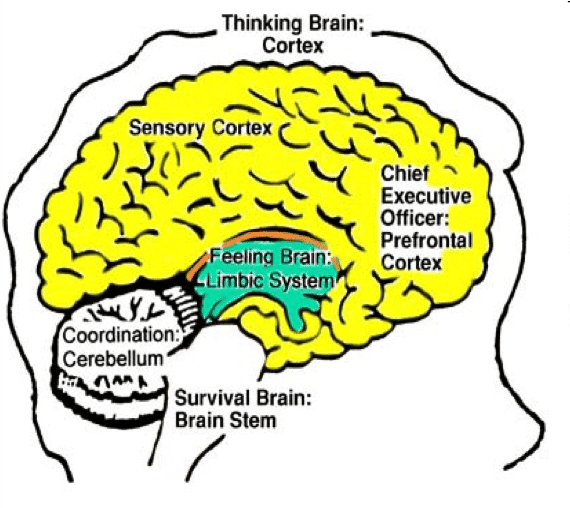
Calm Brain State
Read the transcript
This transcript was made from the recording by software. It may have small errors.
So I know many of you had or maybe are possibly in trauma-informed care training right now. So we're not going to spend a lot of time here, but briefly revisit some of the possible behavior to pay attention to or wonder about with caregivers as we're in classrooms doing this work with very young children. So for young babies birth to 12 months, that sense of security building in the environment is so important.
Needs. But when babies are feeling the effects of trauma, the world can start to feel like a scary place. A toy falls on the ground and that noise can become scary. A caregiver has a frown on their face and it might be viewed as, oh, anger is coming. So the world isn't as trustworthy. So we might see symptoms like changes in sleeping or eating patterns, more clinginess in the holding, fearful of new things and easily startled.
These are things that caregivers may start to narrate to you. You know, I noticed that Jonathan is just hanging on me. And this could be due to simple developmental spurts. You know, it could be due to lots of different things, but it's our job to help wonder and explore to really get down to the bottom because the baby's trying to tell us with their behavior, something's not right, something's different, and I need you to figure it out.
And security that I need.
Trauma Informed responses- Infants (Birth to 12 months)
please so the chart below for more details
Developmental Task
Building a sense of security in an environment in which they can trust parents, family members, and others to lovingly take care of basic needs.
Effects of Trauma
The world begins to feel like a scary place. The attachment process is affected because the environment is not trustworthy and dependable
Possible Symptoms
Changes in sleeping and eating patterns; clinginess; and difficulty separating from adults (especially parents); inconsolable crying; fearful of new things; easily startled, lack of curiosity; sober mood.
Trauma Informed responses- Infants (Birth to 12 months)
please so the chart below for more details
Developmental Task
Growing feelings of independence. Using words or gestures to communicate needs to express feelings. Interacting with peers
Effects of Trauma
Development of language, curiosity, and exploratory skills is interrupted. Diminished learning of pro-social behavior.
Possible Symptoms
Difficulty paying attention; isolation; fearfulness; aggressiveness; anxious reactions to loud noises; and stomachaches and other complaints.
Check in on Feelings
Help children explore feelings throughout the day
We have to do a better job at anticipating problems, and preventing meltdowns, and responding to children when we start to notice those signs"