
Lesson 3Implicit Bias & Culture
Objective 2. Examine how personal and professional values and beliefs impact relationships with children, families, and practitioners.
The simplest definition of culture includes those values, beliefs, and practices shared by a group of people.
What is Culture?
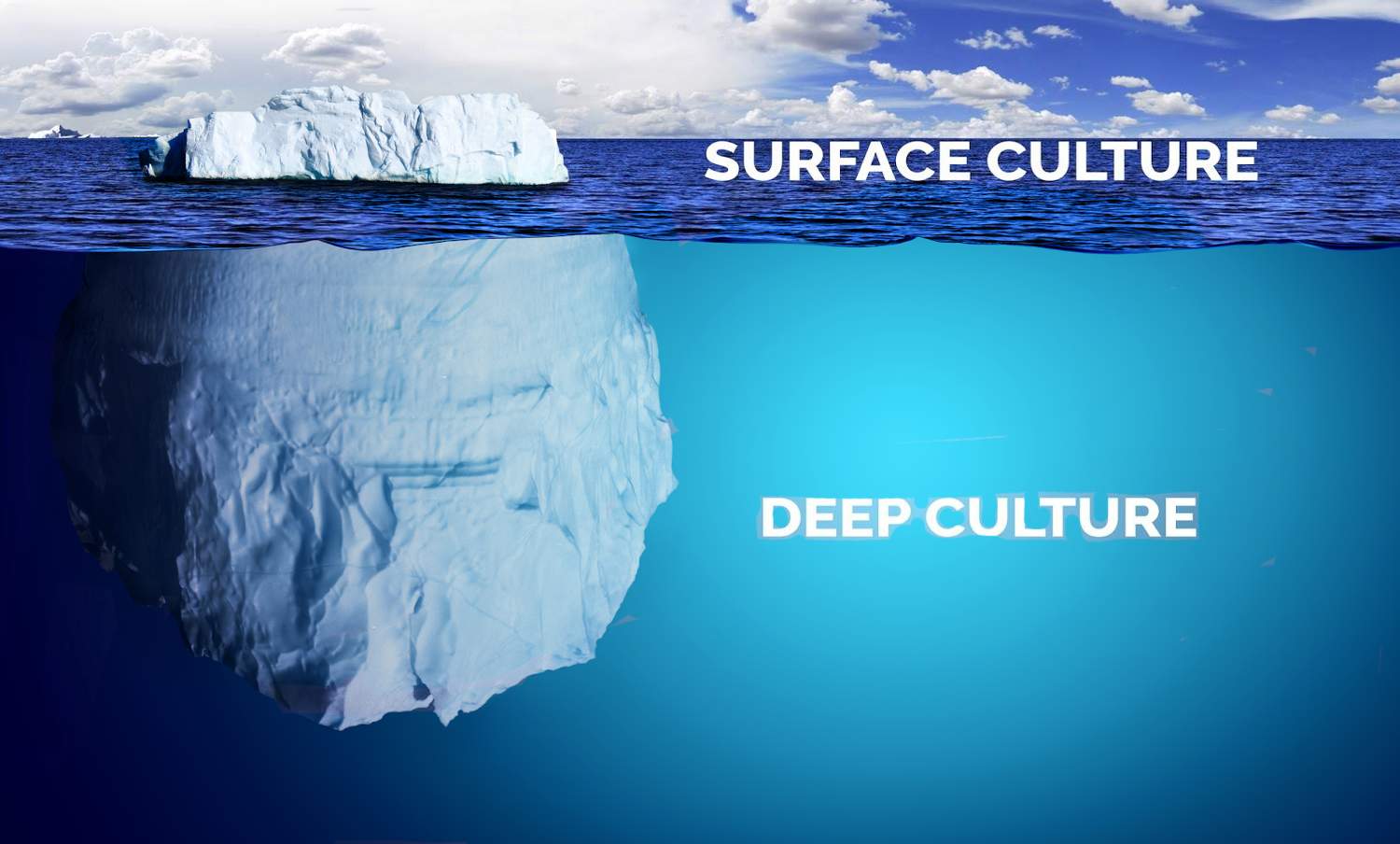
Surface Culture
Observable elements of culture
Deep Culture
Unspoken knowledge and unconscious assumptions that influence our worldview and how we learn information
Knowledge Check: Surface vs. Deep Culture
Instructions: Identify whether the card is surface or deep culture.
Surface Culture
- Languages
- Dress
- Holiday Customs
- Festivals
- Food
- Games
- Performing Arts
Deep Culture
- Notions of Etiquette
- Gender Roles
- Values
- Views on Raising Children
- Importance of Time
- Attitudes Towards Age
- Importance of Space
- Learning Styles
Where do single stories and deficit narratives show up in your work? (Select all that apply.)
- A. ECE Administrators
- B. Teachers/Providers
- C. Peers and Colleagues
- D. Myself
- E. Leadership in my organization
- F. Supervisor
- E. Families
See the answer
Trick question - all of the above is the correct answer, implicit bias shows up in all of us.
Read the transcript
This transcript was made from the recording by software. It may have small errors.
Chantel and Eva and Lauren, I'd love to be a fly on the wall. Yeah. In their groups, because I know that there are many people who are together in one room, but here we go. All right. So we see that. Wow. Okay. So God and teachers and providers, administrators, and in families, we see, and thank you all so much for your response. But what we really, know, right, is that the results actually reveal to us that bias shows up in all of us, right?
And you've probably heard people say, I'm not biased, I'm Black, and I teach Black children, so how can I be biased against my own race? Or I don't see color, I'm not biased. So the poll was really a trick question, wasn't it? We really could have added an option one other that said all of the above, because the truth is really that we all have bias. We all have implicit bias.
So the question that is before us is where do we begin to address implicit bias that lives within each of us? And what are the key strategies and approaches to bring about change?
Results of the poll are shared reminding us we all have implicit bias
"The problem with stereotypes is not that they are untrue, but that they are incomplete; they make one story the only story"
- Chimamanda Adichie
We need to ask ourselves……
- How do your own values and beliefs influence your perceptions and expectations of the expectant families, young children and their families, and program staff you serve?
- Did you ever find your own values and beliefs about pregnancy, child rearing, or parent-child interactions in conflict with those of the staff, families, or organization you serve? If so, how did you resolve it?
- What learning or training experiences might be helpful to you in working with culturally and linguistically diverse children, families, staff, and communities more effectively?
- How de we show up?